WEST
Memphis
Highlight Events
The highlight events will include receptions and celebrations at select participating venues..
MEMPHIS
-
-
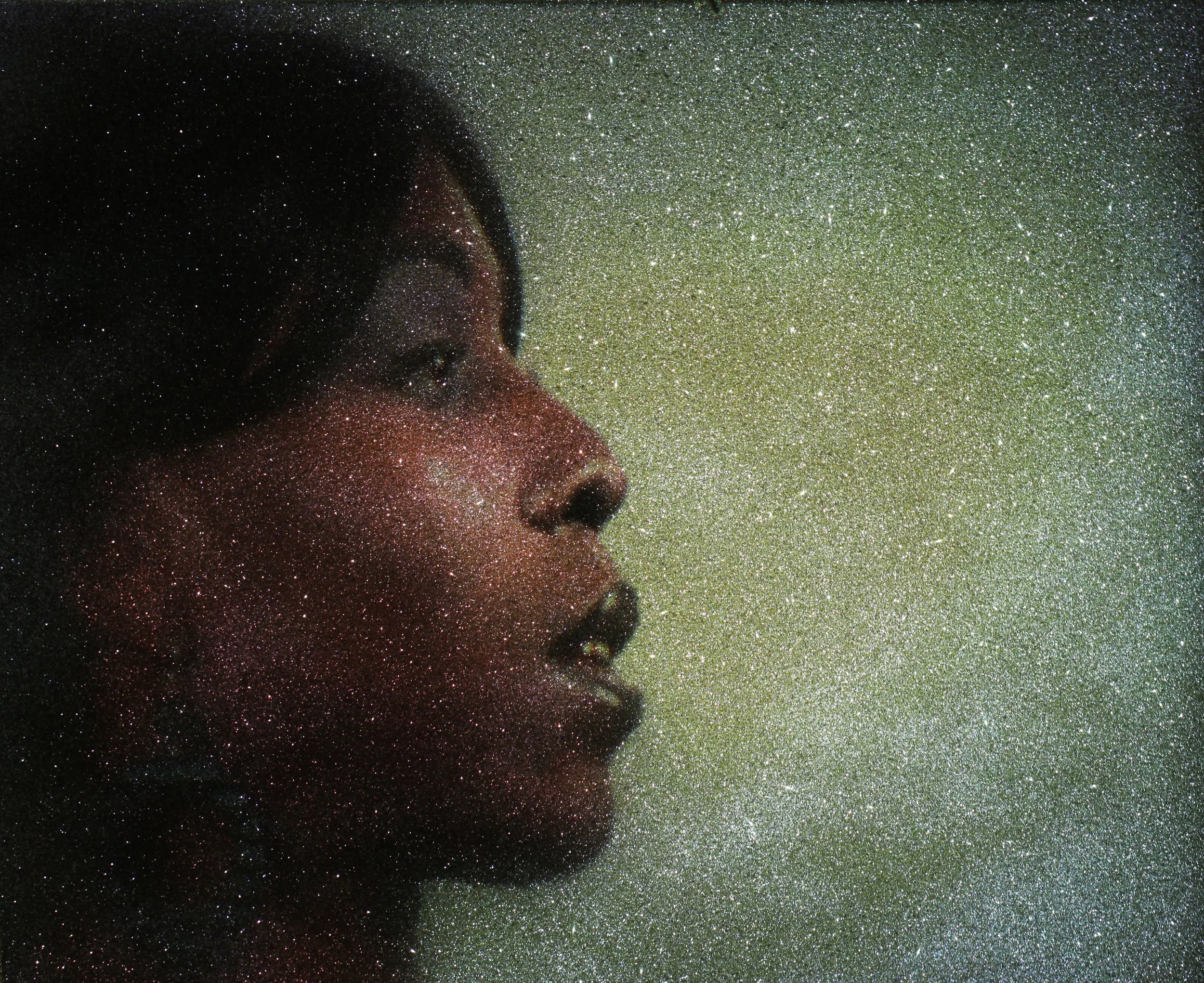
In May of 2020, the Memphis College of Art (MCA) graduated its last class of students, ending an illustrious 84-year history of contributing to the creative, economic, and cultural flourishing of the city of Memphis. In addition to being a touchstone for the regional arts community, MCA graduates ventured across the country and around the world where they nurtured their own careers as well as inspired generations of others through teaching. The college’s history is intimately tied not only to the city but also to the Brooks Memorial Art Gallery, today the Memphis Brooks Museum of Art.
Florence McIntyre played a role in founding both institutions, including in their organization, professionalization, and success. It is therefore fitting that the final exhibition the museum mounts in its original home in Overton Park is a celebration of its sister organization’s august history. Through this exhibition of 90 faculty, administrators, and graduates who represent the institution's diversity, Remembering the Memphis College of Art, 1936-2020 highlights the school’s success in educating and fostering artists. Featured are ninety works across a range of media spanning the school’s history and is organized into groupings of faculty and their students. The exhibition is an opportunity to reflect on the historical impact of the college as well as celebrate its continued legacy regionally and beyond.
The exhibition includes work by Mario Bacchelli, Brin Baucum, Dale Baucum, Kim Beck, Tootsie Bell, Peter Bowman, Cynthia Bringle, Bunny Burson, Fred Burton, Burton Callicott, Karen Carrier, Nancy Cheairs, Martha Christian, Funlola Coker, Michael Coppage, Jay Crum, Beth Dary, Maritza Dávila Irizarry, Alonzo Davis, Patrick DeGuira, Carol DeForest, Don DuMont, Henry Easterwood, Thorne Edwards, Biff Elrod, Ted Faiers, Annette Fournet, Lurlynn Franklin, Moko Fukuyama, Ahmad George, Betty Gilow, Luther Hampton, Rob Hart, Adam Hawk, Michael Hayes, Randy Hayes, Pinkney Herbert, Sharon Havelka, Kyle Holland, Amy Hutcheson, Gere Kavanaugh, J. D. Kelly, Tommy Kha, Tom Lee, Phillip Lewis, James Little, Susan Maakestad, Kate Madison, John McIntire, Emily Miller, Remy Miller, Carl E. Moore, Haley Morris-Cafiero, Joe Morzuch, Floyd Newsum, Michele Noiset, Laurie Nye, George Oberteuffer, Kong Wee Pang, Fidencio Fifield Perez, Ed Perry, Melinda Eckley Posey, Richard Prillaman, Ed Rainey, Veda Reed, Sheri Fleck Rieth, Robert Riseling, Murray Riss, Ebet Roberts, Marc Rouillard, Ted Rust, Jennifer Sargent, Jeanne Seagle, Elizabeth Sheehan, Vitus Shell, Martina Shenal, Allison Read Smith, Dolph Smith, Peter Sohngen, Dorothy Sturm, Cynthia Thompson, Carroll Todd, Martha Turner, Leandra Urrutia, George Wardlaw, D'Angelo Lovell Williams, Sean Winfrey, Jill Wissmiller, Bill Womack, and Tad Lauritzen Wright.
-
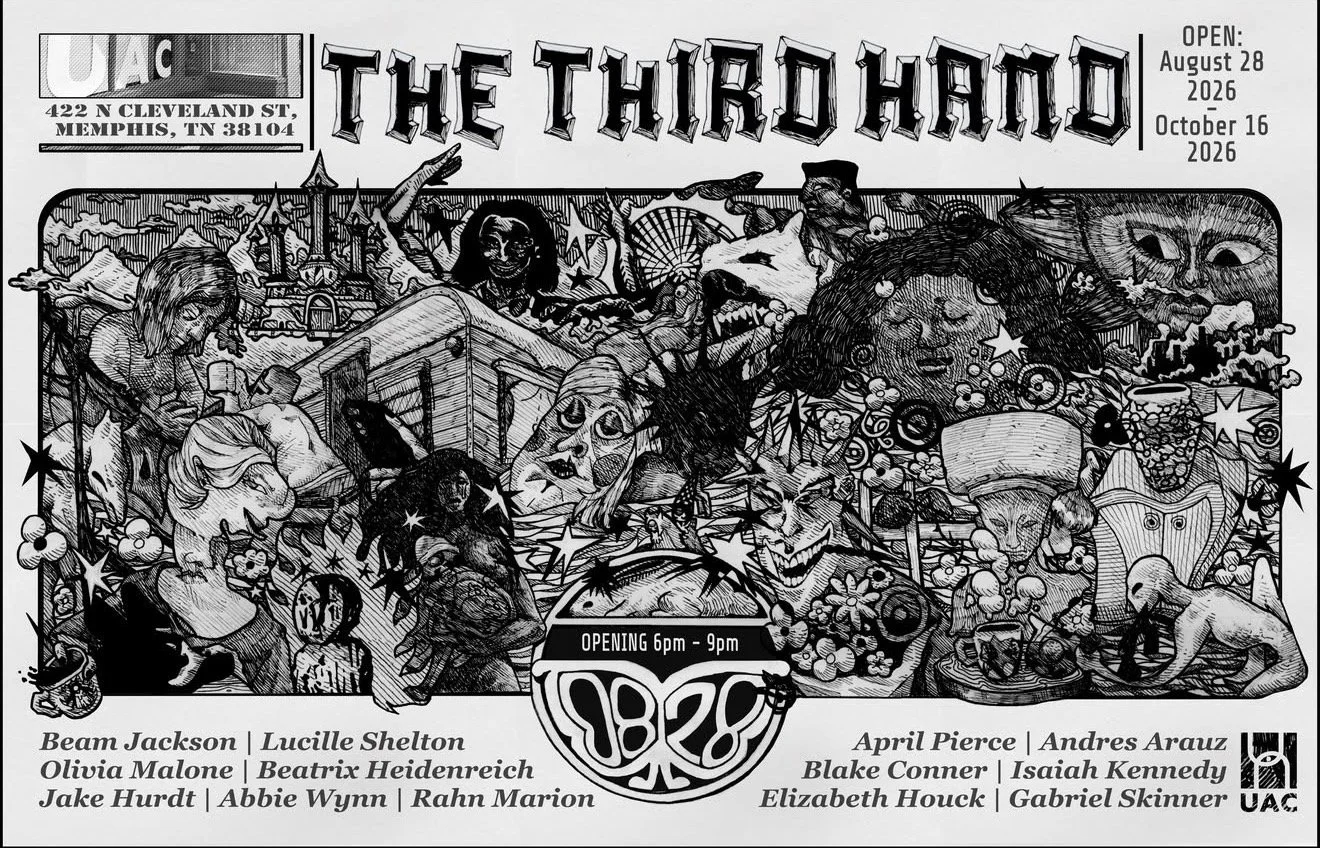
422 N Cleveland St, Memphis, TN 38104
The Third Hand
August 28th- October 16th 2026
August 28th: Opening Reception 6pm-9pm
-
The desire to breathe the will of life cannot be dulled. The painter Philip Guston described the spirit of creativity as the third hand that remains working when all other things leave a maker in their space.
Inspired by the hand that remains, this group show examines creativity and its relationship to identity through figurative representation. These relationships are explored by 12 artists through paintings, drawings, ceramics, and installation. Conversations and dialogue between practices are fostered through pairings and groupings in installation. The artists navigating these notions of creativity are Olivia Malone, Beatrix Heidenreich, Andres Arauz, Liz Houck, Abigail Wynn, Beam Jackson, April Pierce, Gabriel Skinner, Rahn Marion, Jake Hurdt, Blake Conner, and Isaiah Kennedy.
-
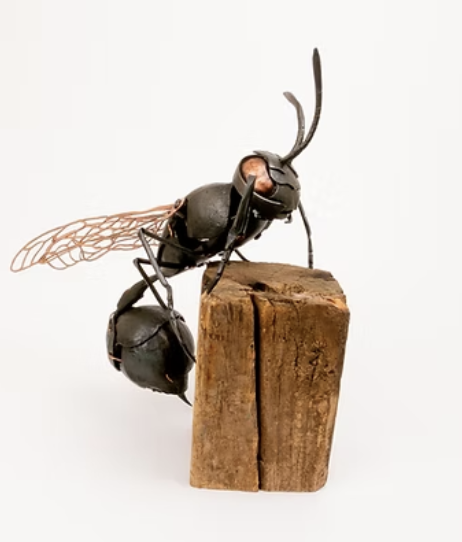
374 Metal Museum Dr, Memphis, Tennessee 38106, United States
Strike! Pour! Create: Works by Metal Museum Apprentices
September 5th, 2026 - January 31st, 2027
-
The exhibition includes work by Sean Kingston, Michael Chmielewski, John Medwedeff, Savannah Smith, Lewis Body, Stephen Yusko, Mak Henrickson, Gary Perk, JR Lodico, Elizabeth Belz, Logan Hirsh, Abraham Pardee, MC Floyd Nicolay, Reed Peck-Kriss, Cassi Rebman, Ian Skinner, Jeff Wallin, Chris Winterstein, James Cooper, Timothy Schaeffer, Nina Yao, Alexandra Rose Weaver, Jake Brown, Sarah Dorau, and Ann Klicka
-
575 S. Mendenhall Rd
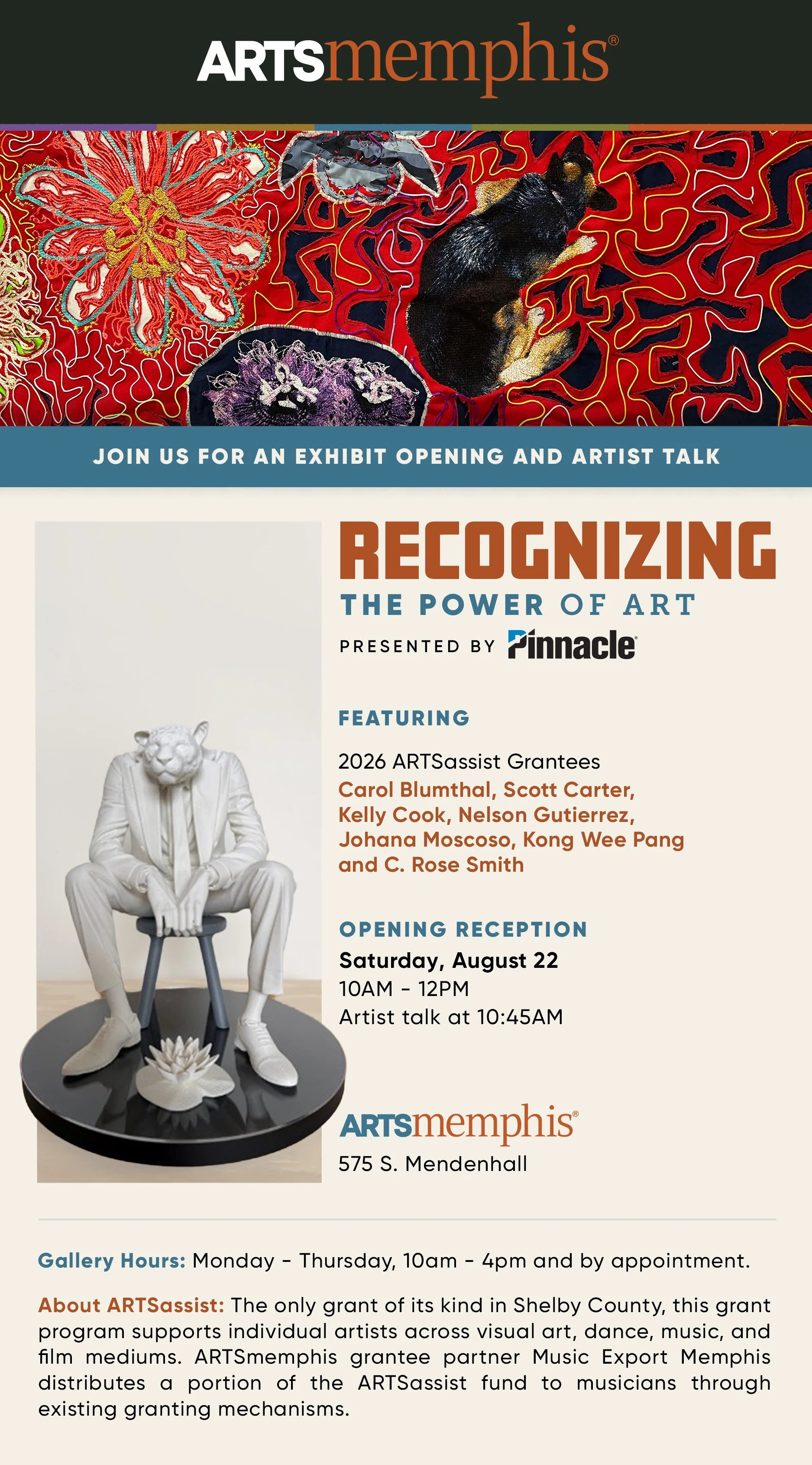
Recognizing the Power of Art
Presented by Pinnacle
Opening Reception Saturday, August 22nd 10-2pm. Artist talk at 10:45am
-
A group show featuring the seven 2026 ARTSassist grantees:
Carol Blumthal, Scott Carter, Kelly Cook, Nelson Gutierrez,
Johana Moscoso, Kong Wee Pang, and C. Rose Smith.
About ARTSassist:
The only grant of its kind in Shelby County, this grant program supports individual artists across visual art, dance, music, and film mediums. ARTSmemphis grantee partner Music Export Memphis distributes a portion of the ARTSassist fund to musicians through existing granting mechanisms.
Gallery Hours are Monday-Thursday 10am-4pm and by appointment
-
4339 Park Avenue, Memphis, TN 38117
Debbie Likley Pacheco: Living in Layers in the Mallory and Wurtzburger Galleries
June 14th - September 27th, 2026
-
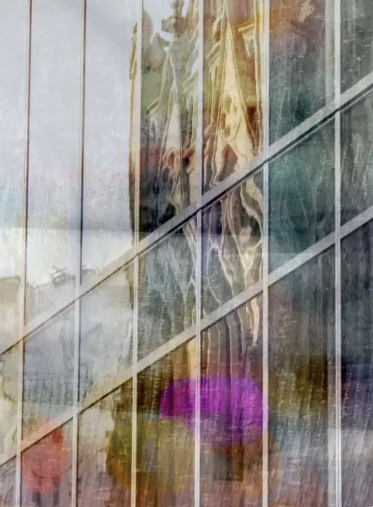
Debbie Likley Pacheco was taught to paint by her father when she was a child. She studied design at the University of Memphis, while also taking the occasional photography and painting class. After graduating, she pursued a career in advertising as an art director, but about twenty years ago, she chose to leave the design field and devote herself to full-time painting. Pacheco currently works in mixed media, combining digital and analog methods to create layered images that straddle a line between naturalism and abstraction. The artist begins with original photographs of busy cityscapes. Using basic editing software such as Photoshop and Procreate, Pacheco adds digital layers to the photographs before having them professionally printed on fine art paper. Next, she adds paint to the printed images, affixes them to wooden panels, and coats the final works in multiple layers of wax for protection, texture, and more layers of visual depth.
Pacheco approaches the concept of layering both literally and symbolically. Photographs for the series on view in Living in Layers were taken in New York City and focus specifically on people walking in public places and on fragments of buildings, particularly street-facing facades that comprise so much of the visual landscape in the densest parts of the built environment. Pacheco’s final artworks vary in their levels of abstraction, mirroring the experiences of people emerging from buildings or the subway as they begin to walk through the city; at first, there is a blur of movement all around them, but eventually they center themselves in the new environment and their eyes focus on more specific things.
-
2000 N Parkway Rhodes College, Clough Hall, Memphis, TN 38112, United States
Seams: Work by the Metal Museum Staff
August 28th, 2026 - October 17th, 2026
-
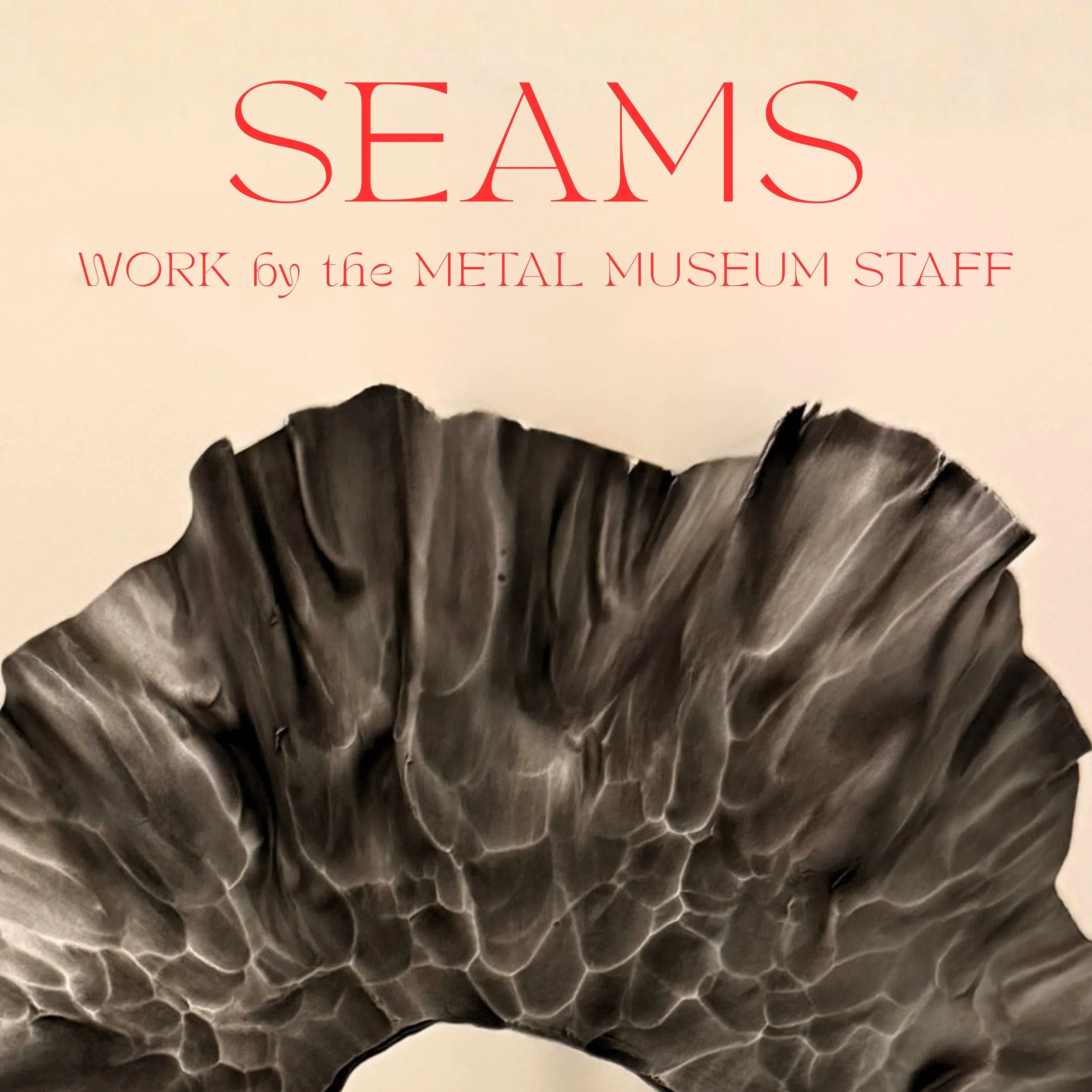
As the Metal Museum prepares to move into Overton Park's Rust Hall, Clough-Hanson Gallery takes a moment to spotlight the work of the people behind the museum. The exhibition features work in a range of media made by staff from across the Metal Museum's departments:
Aiko Hamamoto, Alexandra Rose, Ashley Walker, Bob Rogers, James Vanderpool, Jeannie, Tomlinson Saltmarsh, Jim Masterson, Lauren McGeorge, Natalie Meihofer, Nina Yao, Paige Van Doren, Isabella Brewer, Kevin Burge, Beth Sturm Lonsinger, Jessica Demster-White, Stephanie Savic Polk, Gary Perk, Anthony George II, Thais Lloyd
-
Sheet Cake Gallery, 405 Monroe Avenue, Memphis, TN 38103
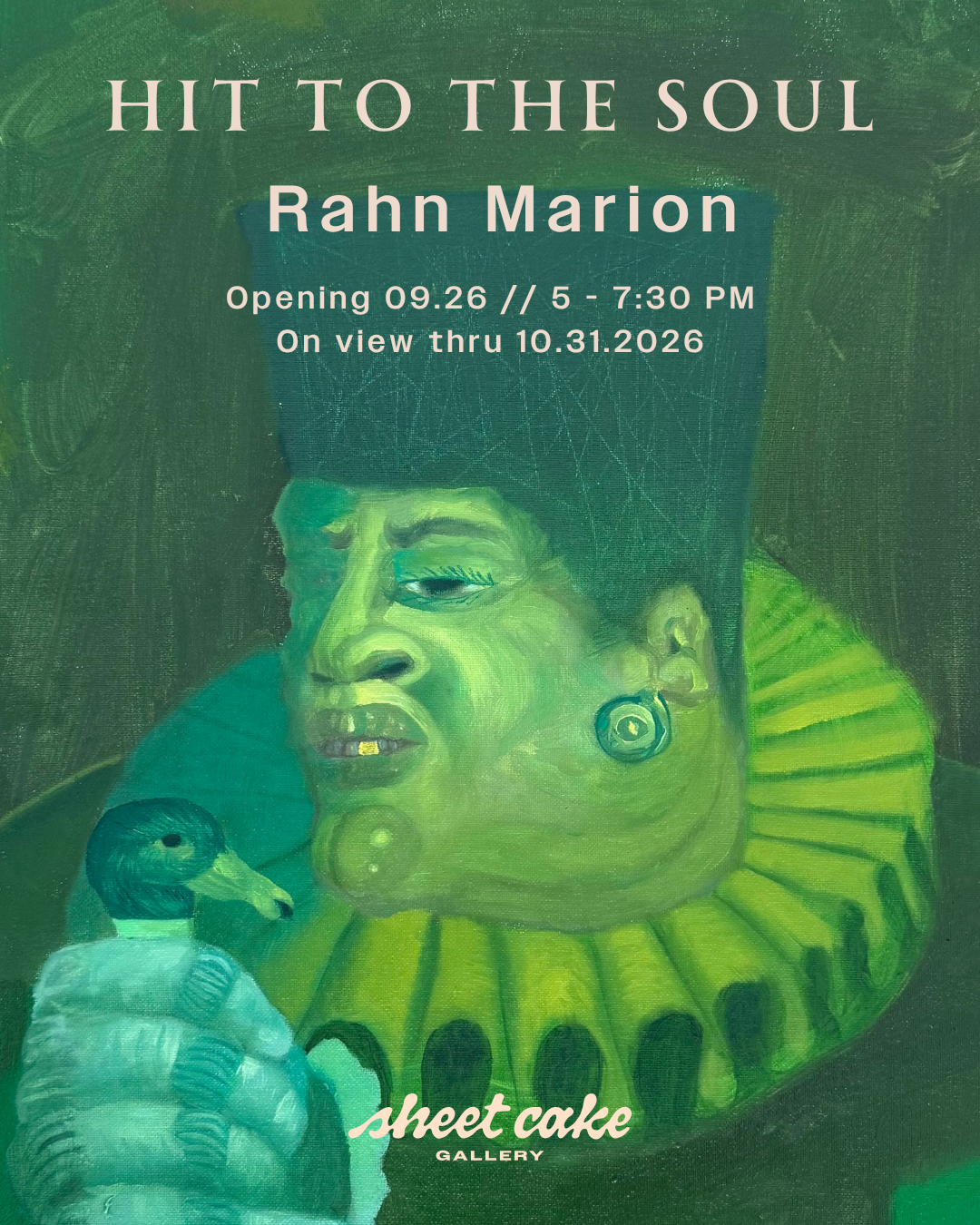
Hit to the Soul // Rahn Marion
September 26th, 2026 Opening Reception
-
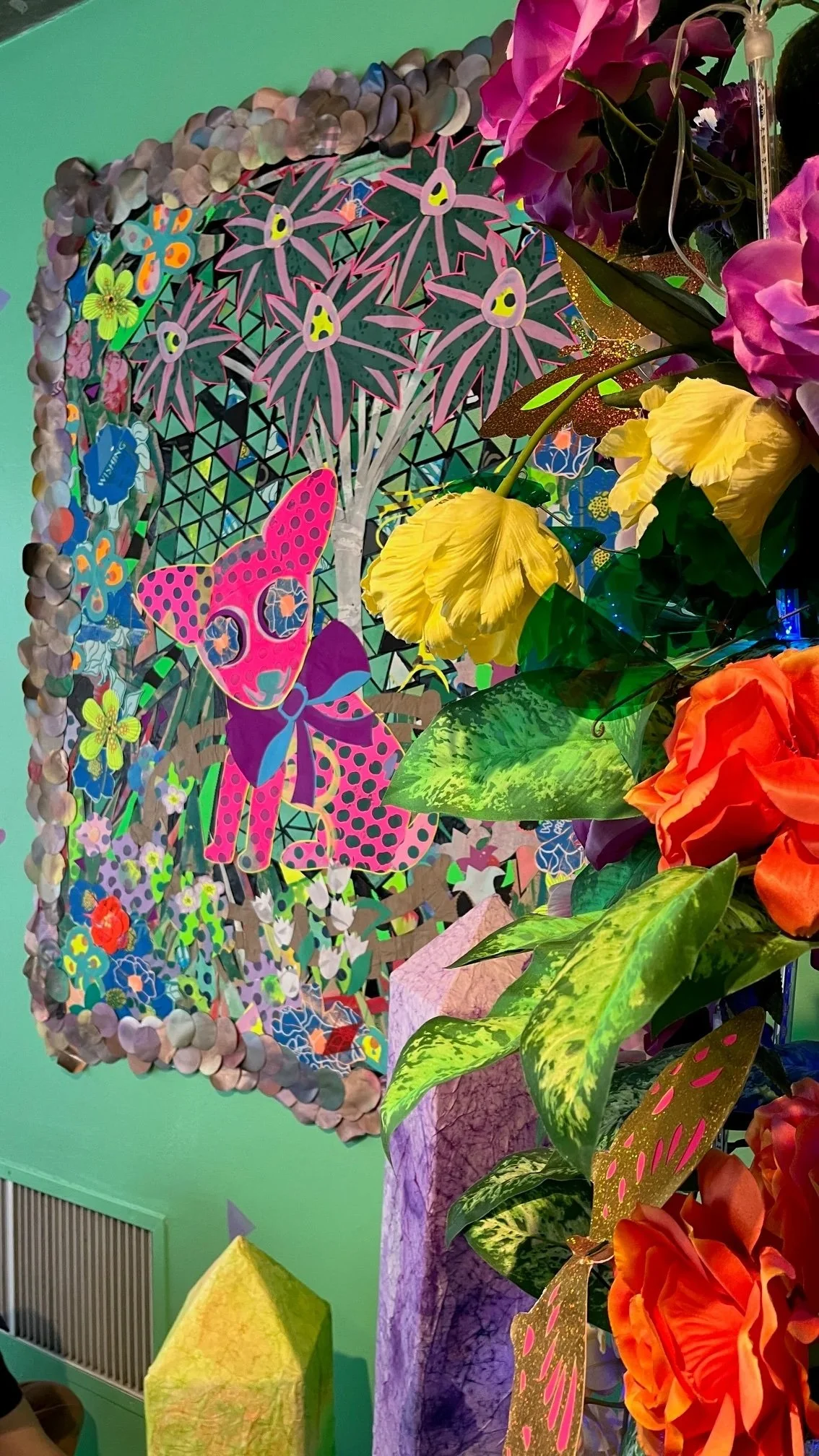
Opening reception at Sheet Cake Gallery for a solo exhibition by Memphis-based artist Rahn Marion. Marion employs an expansive visual language that references Medieval manuscripts, Americana, and mythological and religious symbolism, all rooted in his perspective as a queer Black man.
-
3715 Central Avenue, University of Memphis, Communication and Fine Arts Building
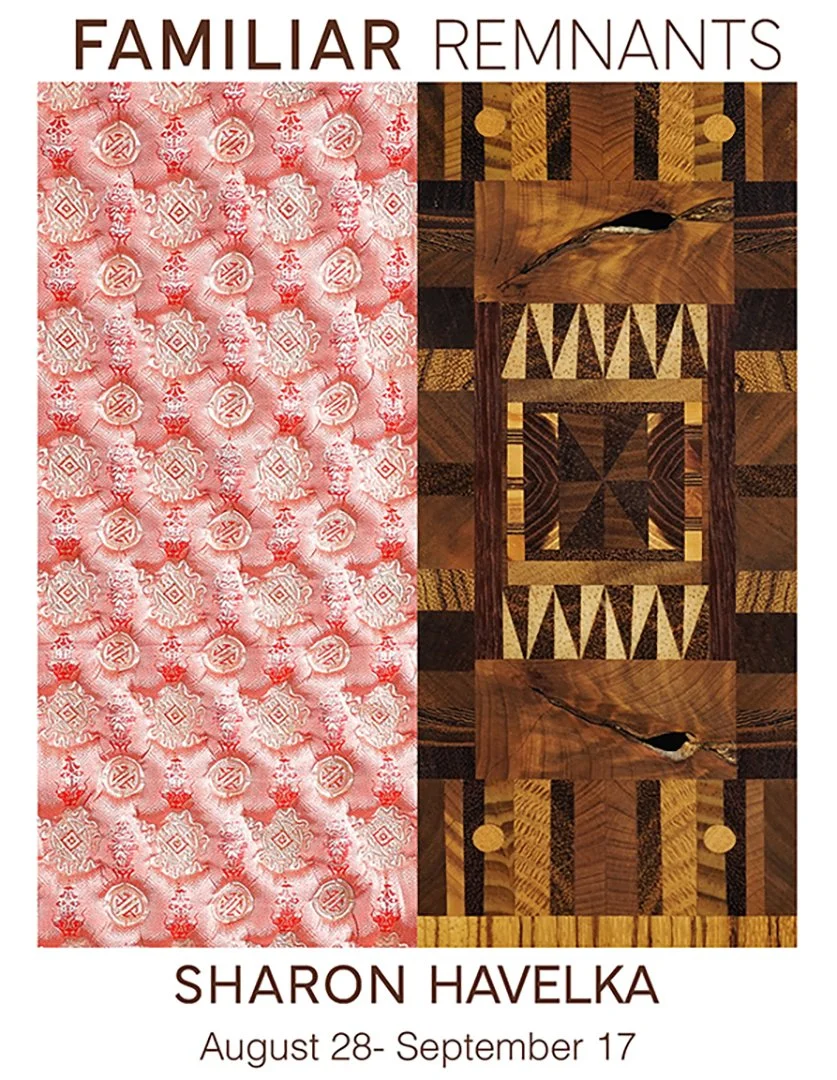
Sharon Havelka: Familiar Remnants
August 28th - September 17th, 2026
-
Works in mixed media fabric and fine woodworking by nationally recognized Memphis-based artist, Sharon Havelka.
Opening reception is Friday, August 28, 2026, 5-8pm. A gallery talk with the artist will be held on Thursday, September 10th at 3pm in the galleries. All events are free and open to the public.
Sharon Havelka is a mixed media fiber artist whose practice is deeply influenced by her southern upbringing as a third-generation Chinese American. Her family immigrated to the Mississippi Delta in the 1940s and later settled in Memphis, where the cultural landscape continues to shape her work. Drawing on this layered heritage, Havelka explores themes of belonging, resilience, and cultural memory through fiber-based forms that bring together history with contemporary art expression.
-
ShapeShifter Art School, 405 Monroe Avenue, Memphis, TN 38103
Justin Bowles | L’Esprit
Artist talk: October 3rd, 11:00 am
-
ShapeShifter is thrilled to present the paintings, works on paper, and acrylic box assemblages of Justin Bowles. Her latest work culminates in a show entitled L’Esprit, a French word used not only for “spirit” but also for a certain vivaciousness or capacity for joy.
The show title is also a nostalgic wink to the 1980’s clothing brand, ESPRIT, beloved for its vibrant colors and patterns. This body of work blooms from five core images of fruit, flowers, and birds, expressed in works on paper, paintings, and acrylic boxes of layered colors.
Bowles states, “If this work had closed captioning it would read
“upbeat pop music playing” to describe its soundtrack.”Show run: September 1st through October 17th
Opening reception: Friday, September 11th, 5:30 pm - 8:00 pm
Artist talk: October 3rd, 11:00 am
-
97 Tillman Street, Memphis, TN 38111
Emily Leonard: Praire
September 1- October 10, 2026
Opening: Fri 11 Sep, 5-7 pm
Artist Talk: Sat 26 Sep, 11 am
-
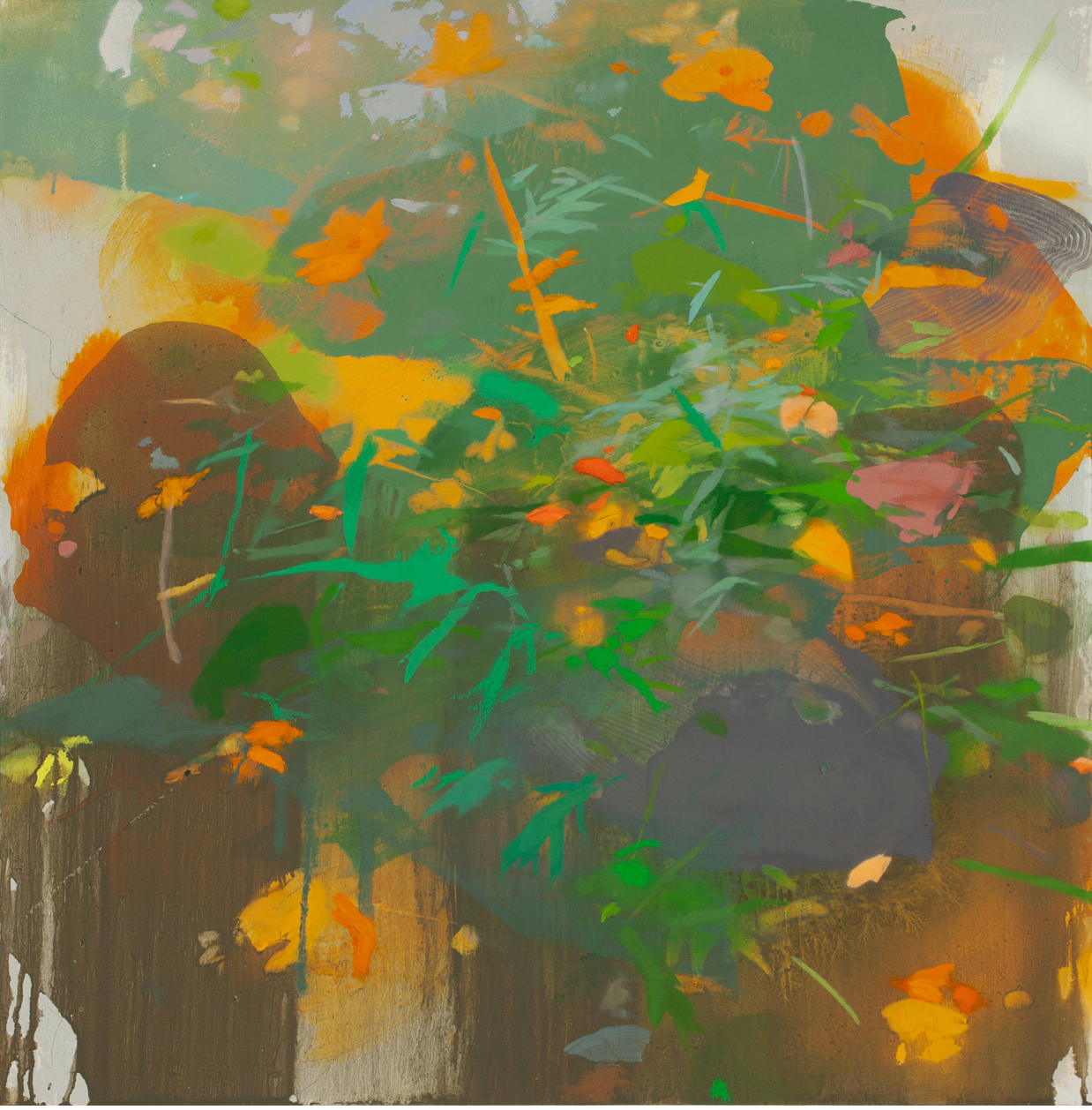
A practicing painter for over 20 years, Emily Leonard is known for sublime representations of landscapes and wildlife. Developed through a process of layering transparent glazes, gestural lines and emotive brushwork, her recent paintings transform botanical studies into meditative aesthetic experiences. Each layer plays a role in distilling the literal representation of her subject. Dense moments of movement and lavish intricacies hover delicately between abstraction and representation. Sweeping pastel hues generate a delicate balance of light and dark, transparency and opacity – unraveling rhythm and visceral essence of the plant. Leonard is inspired by the astonishing beauty and perpetual tenacity of flowers, returning year after year for a brief and vulnerable yet ecologically crucial lifespan.
Emily Leonard is a Nashville native. She received her BFA from Furman University. Leonard has been published in magazines and catalogues including Garden and Gun, Southern Living and Studio Visit by Open Studios Press. She has participated in exhibitions across the United States and in residency programs at the Alfred and Tratford Klots Foundation in Brittany, France and the Jentel Foundation in Banner, WY. Her paintings are included in numerous private and public collections around the world, including those of the Tennessee State Museum, the Nashville Courthouse, Swedish Hospital in Seattle, and UBS, Nashville.